“Parents are not the primary curriculum because they know the most—but because they are the first architects of reality.”
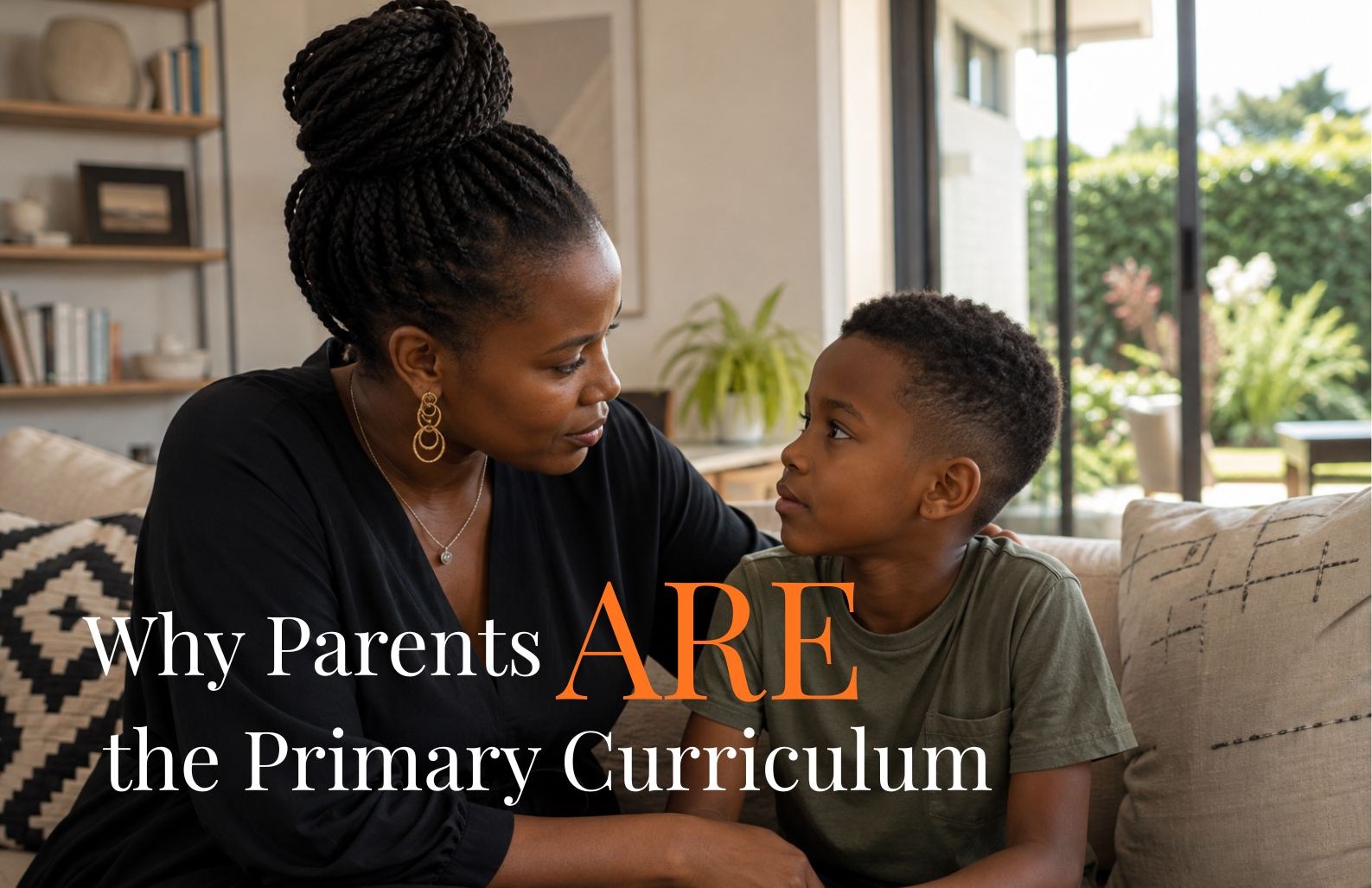
A parent is a child’s first curriculum. Not because a parent knows the most. Because a parent is the first person who teaches a child how to interpret reality. Every correction, every explanation, every reaction a child watches at home is a lesson in how to read the world. That teaching starts long before a school does, and it continues every day after the school day ends.
There is a bird that flies forward while looking backward. It carries an egg in its beak. The future, retrieved from the past.
This is Sankofa.
And Sankofa is the perfect image for what African parents are being called to do today.
Not to return to the village. Not to reject modern knowledge. Not to romanticise hardship.
But to retrieve one thing: the right to interpret the world for their children.
Parents Are Not the Primary Curriculum Because They Know the Most
Parents are not the primary curriculum because they know the most. They are the primary curriculum because they are the first people who teach a child how to interpret reality.
Consider two children.
Both come home from school and say:
The child “Someone made fun of my name.”
One parent says:
“Maybe you should change it. It’s hard for people.”
The other parent says:
“Your name was given to you by your grandmother. It tells the story of your people. They mocked it because they don’t know that story. That’s their loss, not yours.”
Same event. Completely different interpretation of reality.
The first child learns shame. The second child learns context.
The first child learns to shrink. The second child learns to stand.
The first child learns to adapt to the world. The second child learns to read it critically.
Neither parent taught a subject. Both parents taught something far more powerful: how to navigate.
This is what education, at its deepest level, has always been about.
Not information. Formation.
And formation begins in the home, long before a teacher ever meets your child.
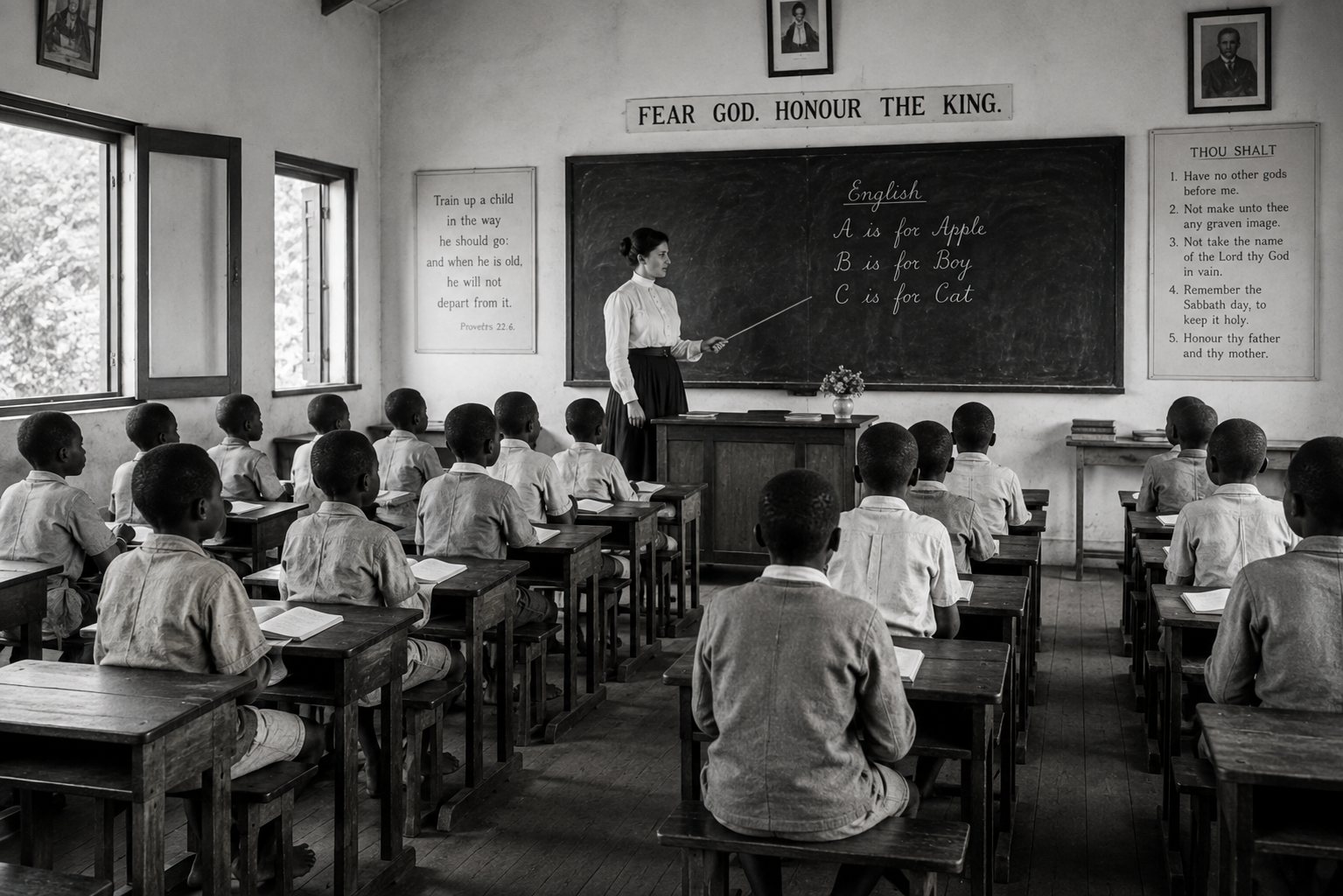
The Wound We Are Still Carrying
There was a time when African parents did not doubt their ability to interpret the world for their children.
The parent was the living archive. The moral compass. The bridge between the child and the ancestors.
Then colonialism arrived.
And it didn’t just change what was taught. It changed who could teach.
The missionary school placed the foreign teacher at the centre of knowledge. The parent, with their stories, their language, their wisdom, was pushed to the edge.
A child who listened to their parents was labelled backward.
A child who absorbed the new curriculum was labelled enlightened.
Generations of African parents internalised this hierarchy. They began to believe that real education happened elsewhere. Behind school gates. Inside foreign books. Administered by strangers with certificates.
The parent became a bystander in their own child’s formation.
That is the wound we have not yet healed.
And that wound is the reason so many African children grow up knowing more about European history than their own, feeling more connected to foreign celebrities than their own elders, and measuring success by how far they can escape their origins.
The gap we feel between home and school, identity and achievement, belonging and success is not a natural gap.
It was manufactured.
And it can be unmade.
Sankofa Is Not Nostalgia
Here is what Sankofa does not mean.
It does not mean going back to live in the past.
It does not mean rejecting modern knowledge.
It does not mean romanticising poverty or hardship.
Sankofa is practical. It is about retrieving what works and applying it to the world our children actually inhabit.
What works is the method.
Our ancestors did not have textbooks. But they had a sophisticated educational process:
Children learned mathematics through measuring grain and building homes.
They learned ethics through storytelling and the lived example of elders.
They learned history through oral archives and the names they were given.
They learned ecology through farming and observation.
They learned community through participation.
This was education embedded in experience. Not abstract, not removed, but lived.
The parent was the orchestrator of this experience. Not the only teacher. But the primary curator of the child’s encounter with the world.
That role is not obsolete. It is more urgent than ever.
What This Looks Like Today (And It Is Not More Work)
Reclaiming this role does not mean becoming your child’s full-time teacher.
It does not mean rejecting formal schooling.
It does not mean adding hours of lessons to your already exhausting day.
It means shifting your attention.
It means recognising that the moments you already share are educational:
The dinner table conversation is a lesson in communication.
How you handle a difficult neighbour is a lesson in conflict resolution.
How you speak about your work is a lesson in purpose.
How you respond to bad news is a lesson in resilience.
How you treat someone who cannot repay you is a lesson in ethics.
You are already teaching every single day. The only question is whether you notice.
When you intentionally design these moments, turning cooking into a lesson in chemistry, budgeting into a lesson in priorities, storytelling into a lesson in history and strategy, you are not adding to your burden.
You are revealing the depth of what you already do.
One Question Changes Everything
There is a question that haunts African parents.
“Am I doing enough for my child’s education?”
This question assumes education is something you provide, like fees, books, or a tutor.
But education is not something you provide.
It is something you embody.
The real question is not: “Which school should I send my child to?”
The real question is: “What kind of human being am I becoming, and what am I teaching my child through my becoming?”
Because your child is watching. Not just your words. Not just your lessons. But your life.
And your life is the curriculum.
Imagine This
Imagine what happens when millions of African parents remember that they were never assistants to education.
Imagine what happens when they stop asking permission to teach their own children.
Imagine what happens when they reclaim the right to interpret the world for their families.
Not to shut out other influences.
But to provide an anchor strong enough that their children can engage with the world without losing themselves.
Imagine a generation of children who know exactly who they are. Not because someone told them, but because their parents showed them, every day, through every ordinary moment.
That is not a parenting tip.
That is a movement.
And it begins with one shift in understanding:
You are not the helper. You are the architect.
Prefer to watch this argument? The video is below.