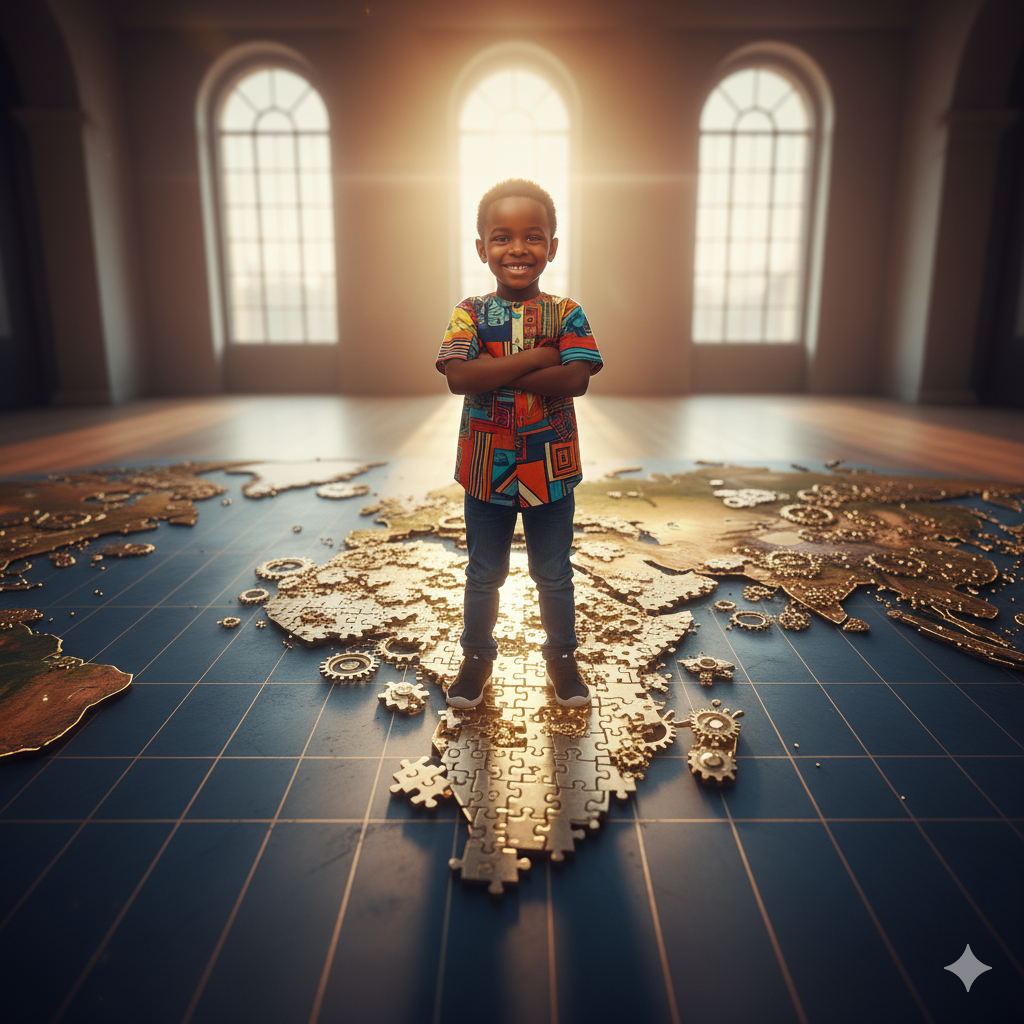
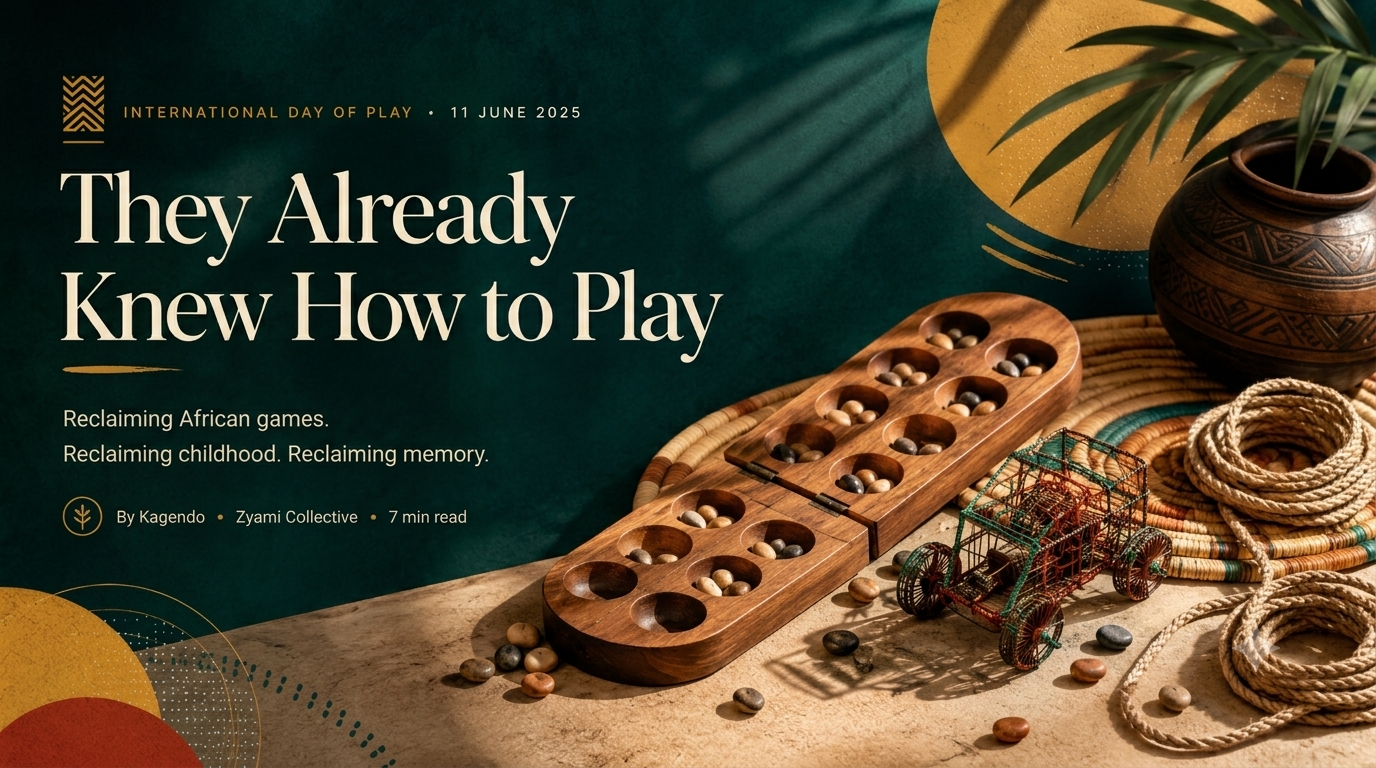
Today the world pauses to celebrate play. But for African children — our children — play was never something that needed a designated day. It was the curriculum.
Long before the first classroom was built on this continent, children were learning. They were learning mathematics through the careful counting of seeds in mancala holes. They were learning strategy through the quiet intensity of bao. They were learning physics — the arc of a throw, the weight of resistance — through the spinning of a hoop down a red-dirt road. They were learning the deep grammar of community through the call-and-response of chase games played as the sun dropped behind the acacia trees.
Play was not the break from learning. Play was the learning.
What science confirms, our grandmothers always knew
Contemporary research now confirms what indigenous African pedagogies understood intuitively: play is not a luxury. It is how the human brain builds itself. Through play, children develop executive function — the ability to plan, regulate emotions, and hold multiple ideas at once. They build language. They rehearse social dynamics. They experience failure at low stakes and learn to recover.
Unstructured, child-led play in particular develops a kind of creative resilience that no worksheet can replicate. When a child decides to build a toy car from wire and bottle caps — as children across East Africa have done for generations — she is not just being creative. She is an engineer. A problem-solver. Someone who looks at the world and asks, what can I make from what I have?
Play is the highest form of research. African children were researchers long before that word existed in the vocabulary of formal education.
The games we are forgetting
Here is the uncomfortable truth we must sit with today: African traditional games are disappearing. Not because they stopped being valuable. But because we stopped treating them as valuable.
Walk into a toy shop in Nairobi, Accra, or Lagos. You will find shelves of LEGO, chess sets, Scrabble, and Monopoly. You will find very little that reflects the play traditions of the continent on which that shop stands. And if you scroll through the wish lists of our children, you will find the same pattern — a quiet erasure dressed up in colourful packaging.
This is not a small thing. When a child plays, they are not just having fun — they are absorbing a worldview. LEGO teaches individual construction. Monopoly teaches a specific theory of ownership and competition. Chess, for all its brilliance, encodes a European medieval hierarchy. None of these are inherently wrong. But if they are all a child ever plays, they grow up shaped entirely by someone else’s imagination of the world.
Bao / Mancala East & Central Africa
One of the oldest board games on earth. Teaches strategic thinking, counting, and forward planning across multiple moves. It uses complex mathematical strategy to capture opponents' pieces
Ampe Ghanaian
Shisima
Morabaraba, Southern Africa
These are not primitive games waiting to be replaced. These are sophisticated knowledge systems encoded in joy. Bao has been studied by mathematicians for its combinatorial complexity. Morabaraba demands the kind of abstract thinking we now pay premium prices to teach children through apps. Our children deserve to inherit these.
The cost of forgetting
When we replace African traditional games wholesale with Western ones, we are not just changing what children do with their afternoons. We are shaping what they believe is worth knowing. We are quietly communicating that the knowledge that came before — the knowledge carried in these games — was inferior. Childish, even.
A child who grows up never playing bao, never building a wire car, never being initiated into the rules of a game passed down from her great-grandmother — that child has lost access to a living connection with her own intellectual tradition. She may become educated. But she will carry a gap where her inheritance should be.
This is not nostalgia. This is about identity architecture. What we play shapes who we believe we are. And who we believe we are shapes what we build next.
A question for every African parent
Can your child name three traditional games from your culture? Can they teach those games to someone else? If not — not as a judgment, but as an honest inventory — something has been interrupted. And it is our generation’s work to restore it.
Reclaiming play as pedagogy
At Zyami, we do not believe this is irreversible. Cultural memory is resilient. It waits. All it needs is a generation of parents willing to remember — and to make remembering a priority, not a performance.
This does not mean rejecting LEGO or chess. Children can hold both. They can be fluent in many play traditions. But fluency in your own tradition must come first. The child who knows where she comes from can go anywhere. The child who has been given everyone else’s tradition but her own is always, in some small way, a guest in the world.
Today, on the International Day of Play, we invite you to do one simple thing: play an old game. Teach it the way it was taught to you, or research it if you never learned it. Let your children see that their ancestors were not waiting for the West to invent something worth playing with.
They already knew how to play. We just forgot to remember.